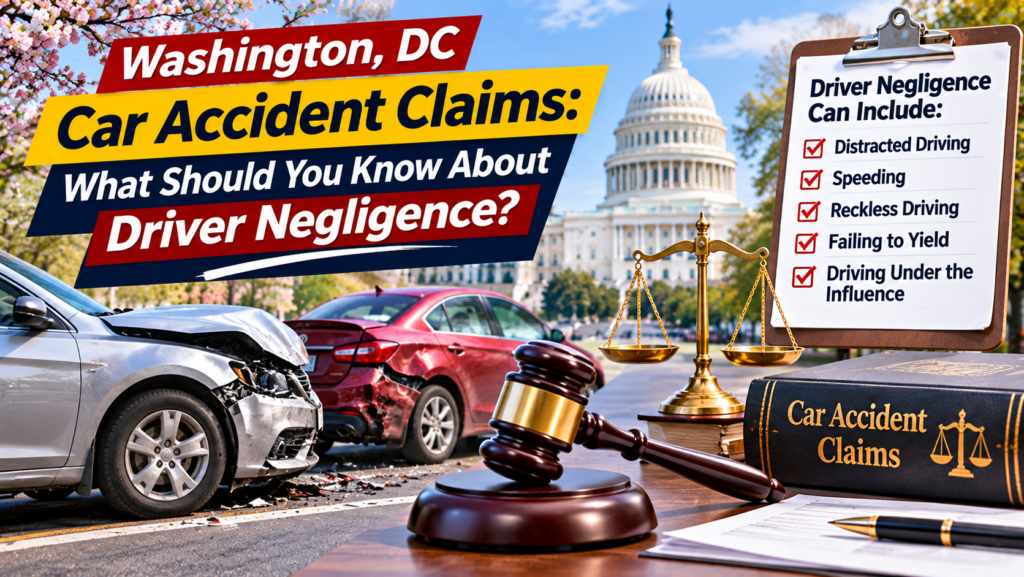
A car accident can convert an average day to a stressful one. All it takes is one reckless driver to leave a person hurt, frightened, and in debt. Washington, DC drivers face crowded streets and heavy traffic on a daily basis. Speeding, distracted driving, and unsafe turns lead to car crashes and devastating injuries. If another driver caused your injuries, you may have a serious injury claim. But how do you prove that the other driver was negligent? And what if there was fault on both sides? Knowing the DC law is knowing your rights.
What Constitutes Driver Negligence?
Negligence is a failure to use reasonable care when performing driving duties. Every driver must take care not to risk others’ safety. For instance, a driver at a crowded intersection must be alert to traffic and obey the signals. Failure to look away from the phone could lead to a disastrous accident. Usually, he/she must prove the recklessness of the injured person.
- Obligation: The motorist had an obligation to drive safely.
- Breach of duty: The driver breached that duty.
- Causation: The driver’s carelessness caused the accident and the injuries.
- Damages: The injured person suffered genuine damages, such as medical bills or lost wages.
These 4 characteristics will be present in most car accident claims. Without embarrassment, you may provoke the insurance company into asking if you’re deserving of the payout.
Common Causes of Negligence at DC Junctions
Driving in Washington, DC may be tough as well: clogged streets, tight turns, and busy intersections. Be especially mindful of bike lanes and crosswalks. Common Examples of Carelessness:
- Distracted driving: By eating and by using a phone while driving (texting, etc.).
- Speeding: Driving too rapidly in heavy traffic, bad weather, or bad roads.
- Running red lights: Driving through an intersection in which cross traffic is granted right of way.
- Tailgating: Following excessively closely, with not enough room to stop a collision if the automobile in front of you suddenly stops.
- Improper lane changes: Changing lanes without checking blind areas for other cars.
- Driving when intoxicated: Driving while under the influence of drugs/alcohol.
- Failure to yield: Not yielding to pedestrians, bicycles, or other vehicles.
One moment of careless misjudgment might have lifelong effects. For example, if you are negligent while turning around an intersection, he or she may suffer a broken bone or spinal injury.
DC Shared Liability?
Big Factor in a DC Car Accident Suit. Contributory negligence applies in most cases of D.C. car accident injuries. This means that if you “contribute” to the accident in some way, you could lose your right to recover for your injuries. For instance, imagine a car runs a red light and strikes you. You were also accelerating. If your speeding was a contributing factor to the crash, the other side may plead contributory negligence or comparative negligence as a bar to your recovery. This can complicate injury cases. A tiny error can impact your ability to collect. But there are exceptions to the law. For example, see District of Columbia Code § 50-2204.52 (protecting certain pedestrians and “vulnerable road users”. With this rule, they can recover if they are negligent as long as they are not the person who caused the injury by their own negligence and that they are more negligent than all of the other defendants. An experienced DC car accident lawyer can review the facts and determine which rule applies to your case.
Who Has To Prove That a Driver Was Negligent?
Good evidence can help you create a timeline of events leading up to and after the crash. It can also provide a defense against allegations that you were responsible for the crash. Proof that could potentially be beneficial would be:
- Accident reports by police.
- Pictures of damaged cars and the accident scene.
- Traffic camera or dash camera footage.
- Eyewitness report of the accident.
- Medical records and bills.
- Telephone records, if relevant.
- Vehicle examination and expert opinion.
Evidence collection should be as rapid as possible. Witnesses can vanish, and tapes of traffic can be erased. Be sure to write down any doctor visits or missed work, and repair expenditures. This will show the impact the crash has had on your life.
What to Do If You Are Hit by a Reckless Driver?
What you say and do after a crash can jeopardize your injury claim. Stay calm and focus on your health. Do these things:
- Dial 911 and inform them of your accident.
- Get medical care, even for minor injuries.
- Photograph the vehicles, the road, and any nearby traffic signs.
- Collect the names and contact information of observers.
- Obtain a copy of the police report for the crash.
- Make an insurance claim for the accident.
- Save receipts for medical expenditures, repair bills, and lost pay.
Don’t give recorded statements to the other driver’s insurance company until you know your rights. Insurance adjusters may also be asking questions that could affect their view of your claim. Also, be wary about accepting a settlement immediately. Early proposals might not account for future care or lost wages.
How Soon Must You File a Claim?
District of Columbia Deadlines In D.C., you have three years to file a personal injury claim (D.C. Code § 12-301). The clock normally starts at the time the claim accrues. For claims against the District government, the rule is different. Under D.C. Code § 12-309, notice is generally required in writing within six months of harm. The notice should include the approximate time, place, cause, and all conditions. Failure to meet the deadline will result in nonpayment. If it’s a federal agency or vehicle, consider getting a lawyer ASAP.
What Can an Auto Accident Attorney in DC Do for You?
Negligent driving liability might be hazy. The other driver’s insurance may deny liability or blame you for the collision. An attorney who has experience in these matters can:
- Analyzing accident evidence and police records.
- Assigning fault to people or corporations.
- Obtaining witness statements and video evidence.
- Reviewing medical records and economic damages.
- Negotiations with the insurance companies.
- Preparing a trial case if necessary.
Price Benowitz Accident Injury Lawyers, LLP protects victims of auto accidents in D.C. It deals with car, truck, motorcycle, bicycle, bus, and pedestrian accidents. It also covers catastrophic injuries, such as burns or spinal cord injuries. A DC car accident lawyer can help you examine your case and talk about what your legal alternatives may be. The sooner you obtain assistance, the better you can preserve critical evidence.
Frequently Asked Questions (FAQ)
- What is negligence by a driver in Washington, DC?
Short answer: Driver negligence is the failure to exercise reasonable care behind the wheel.
Long answer: Anything from blowing a red light to DUI to texting and driving to speeding. Reckless driving causing an accident and injuries may yield a lawsuit for the wounded. You will need to substantiate your argument with evidence to win.
- What if I was somewhat at fault? Will they pay me?
Short answer: It is dependent upon the automobile accident and the law.
Long answer: Most car accident claims in DC have the defense of contributory negligence. If you have contributed in any way to your injury, you could be prevented from recovering. However, there are special protections in D.C. for certain pedestrians and other vulnerable road users. D.C. Code § 50-2204.51 (U.S.).
- What Can You Get Back from a Negligent Driver After a Georgia Accident?
Short answer: Damages, injuries, lost wages.
Long answer: A strong claim may include hospital bills, follow-up care, missed pay, damage to cars, and mental/emotional suffering. It all depends on the facts (evidence and law).
- How Do I Show the Other Driver Is at Fault for My Crash?
Short answer: You demonstrate the driver was negligent and that negligence resulted in the accident.
Long answer: You might do this with photographs, police records, witness accounts, and camera footage. Medical records might also tie your injuries to the collision. All these information can assist a lawyer in forming a clear picture of what occurred.
5 – How long do I have to file an injury claim for a car accident in DC?
Short answer: Three years for most injury claims
Long answer: Personal injury (long answer) (D.C. Code § 12-301) (3 years) Many claims against the District need six months advance written notice. Some cases have particular rules, therefore seek an attorney’s advice as soon as possible.